
Religion
Synopsis
When a priest's wife brings home an orphan boy, her husband is against it. Over time, he develops a connection with him, but is shocked when he finds out the boy's religion.
Genre: Drama, History
Status: Released
Director: Bhavna Talwar
StreamPilot helps you discover where to watch movies legally. Free streaming availability may vary by title and region.
Main Cast

Pankaj Kapur
Pandit Chaturvedi

Supriya Pathak
Parvati Chaturvedi

Hrishitaa Bhatt
Mani

Pankaj Tripathi
Suryaprakash
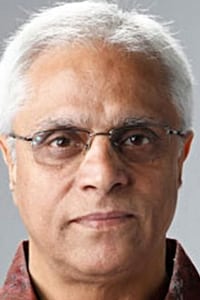
K.K. Raina
. Vishnu Singh
Krish Parekh
Kartikey / Mustafa

Daya Shankar Pandey
Daya Shankar Pandey

Suruchi Aulakh
Suralya
User Reviews
THE-LENS
# Film: *Dharm* **Directed by** [Bhavna Talwar](https://en.wikipedia.org/wiki/Bhavna_Talwar) **Written by** [Varun Gautam](https://en.wikipedia.org/wiki/Varun_Gautam?action=edit&redlink=1) [Vibha Singh](https://en.wikipedia.org/wiki/Vibha_Singh?action=edit&redlink=1) **Starring** [Pankaj Kapoor](https://en.wikipedia.org/wiki/Pankaj_Kapoor) [Hrishitaa Bhatt](https://en.wikipedia.org/wiki/Hrishitaa_Bhatt) [Supriya Pathak](https://en.wikipedia.org/wiki/Supriya_Pathak) [Pankaj Tripathi](https://en.wikipedia.org/wiki/Pankaj_Tripathi) [Daya Shankar Pandey](https://en.wikipedia.org/wiki/Daya_Shankar_Pandey) [K. K. Raina](https://en.wikipedia.org/wiki/K.K.Raina) **Review by Dr Usman Latif Khawaja** ## A Sanctimonious Sanctuary Religion is a conception which is perceived as an ideology and exploited as an evil for nefarious personal motivations. In the absence of a relevant and valid debate, it turns into a disastrous debacle, and its consequences ruin human existence. The very exponents of faith are mercy and forgiveness, but intolerance has relegated them into oblivion, and the roost is ruled by a lawless breed who exploit a fragile social milieu for their own demonic designs. This is where Ayesha Talwar's *Dharm* is possibly the most profoundly intelligent and obtusely unpredictable in its observation of the communal environment in contemporary India. The plot surrounding an orthodox Hindu temple, run by a pious but ritualistically dedicated priest who lives with his wife and daughter in absolute sanctity as decreed by the Shastras for Brahmins, is indelibly imbued with an authenticity on the banks of the pure River Ganges in the holy city of Varanasi, where the young daughter brings an abandoned infant home who was left by his mother on the banks of the sacred river. The dilemma of the holy man is subtly shown as he questions the caste and origins of the child, but his humanity, as decreed by his conscience and faith, will not let him abandon the child, and coaxed by his wife, they adopt the orphan after no trace of the family is determined. The inner turmoil and the excruciating torture he experiences are reflected by Pankaj Kapoor in a way rarely experienced in cinema, as his paternal instincts for the child are evoked and his religious prejudices melt to reveal a truly humane soul in all its glory. The script is beautifully exploited to show the transgression from a sceptical holy man to loving father. The script then, in an astonishing development, goes for the most unpredictable twist when the original mother turns up six years later to claim the child, and it turns out that the holy man was nurturing a Muslim in his house. Thus begins his penance and repentance, as he has to absolve himself of his supposed sin as dictated by the religious ritual. But this also asks the pivotal question of what is more important to human existence, as the psychological battle between faith, ritual and the conscience ensues. While the local miscreants try to malign the holy family by portraying them as sinners, although the child is torn apart in a heart-rending way and the priest observes endless ritualistic fasts to cleanse his body and soul of the alleged misdeed of bringing a non-Brahmin child to his home, he cannot tear the memory of the tiny soul he has reared as his scion from his psyche. The most critical ostracism is exorcised by local politicians who inflame the circumstances to incite a communal riot, and the target is the Muslim minority and the child at the heart of the controversy. This is the most challenging premise I have seen in Indian cinema for decades, and the narration is absolutely stunning and will mesmerise you with its profound intelligence and visually stark reality. The camera is wielded by a woman who knows the sensitivities she is challenging, and she triumphs at every level, from the ravishing dawns and dusks of the Ganges River to the astoundingly authentic locales and lifestyle of the orthodox Hindu community. Her techniques are as flawless as the purity of the concept, and the philosophy as dictated by the scriptures is captured cinematically with a vast horizon which is India itself, rather than as verbose sermonising. This is a religious debate which has never been witnessed in world cinema, let alone Indian cinema, and the lyrical editing and the melodiously haunting background score only enhance the effect of being in a religious sanctuary. The powerful finale is executed in a subtle manner which has never been witnessed in Hindi cinema and will thaw the most cynical critics of their bias against this genuine classic. Ultimately, the applause goes to Pankaj Kapoor, the meticulous script and the immaculate direction, which captivates you from the opening credits, which are a treat in themselves, to the ultra-humane finale, which is beyond praise and will pierce your heart and melt your soul. The questions about religious morality and ritual ambiguity have been challenged and answered as never before, with a haunting and languidly shot and scored masterpiece which needs to be seen by one and all. The accusations against Bollywood of being sentimental and predictable will never be relevant after this extremely intelligent and thought-provoking yet enthralling religious drama, penned with painstaking accuracy by a literary intellectual who does not sacrifice or make any compromises at the altar of cinematic purity, but pays a great tribute to human faith, which is derived from the spirituality imbued by true religion, which exists to provoke human conscience into righteousness, that comes from the belief that mercy is the most spiritual quality granted to the human race by its Creator. This is a truly redeeming piece of cinema, as it does not just absolve its errant characters but also expiates the sins of Indian cinema and its mendacious melodramas with its expertly rendered verisimilitude, astonishingly convincing yet simply flawless. This movie is a landmark, as it marks the juncture where style and content are imbued in a magic potion to excite both the senses and intellect without resorting to technical gimmicks or trying to be an intellectual wannabe masterpiece, yet it surprisingly wins all those merits. As the wise men say, true beauty lies in simplicity and truth, which is reflected in every shade, in every sequence of this memorable classic.









Find available legal streaming services, including free options when available in your region.